We have been hiking at a steady pace through montane forest for nearly an hour. Even with my jacket off it is cool at this altitude. Whenever we pause, the rasping calls of black-billed turacos echo from deep in the trees. I raise my binoculars and search for one of these stunning green and blue birds, but can’t locate it – then a flash of scarlet wings catches my eye and I manage to follow the bird’s escape through the canopy.
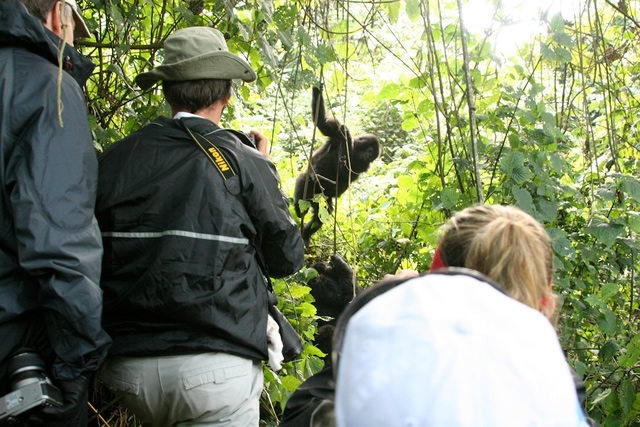
Shortly afterwards I sense we are getting close. We have left the trail and the trackers are hacking through tangled vines and undergrowth. The going eases when we come across a swathe of trampled vegetation, scattered shoots and discarded plant material – a sure sign that a gorilla family passed through here minutes ago.
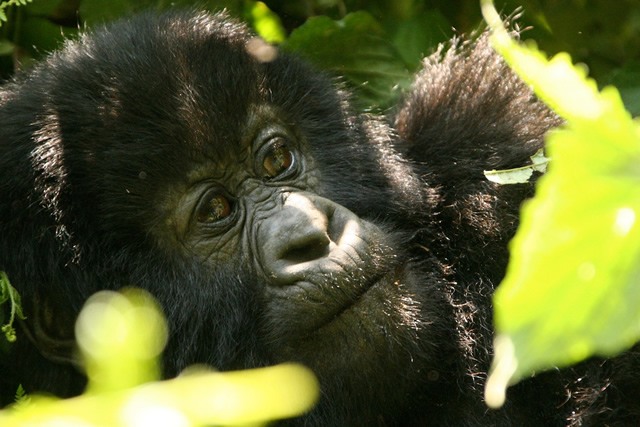
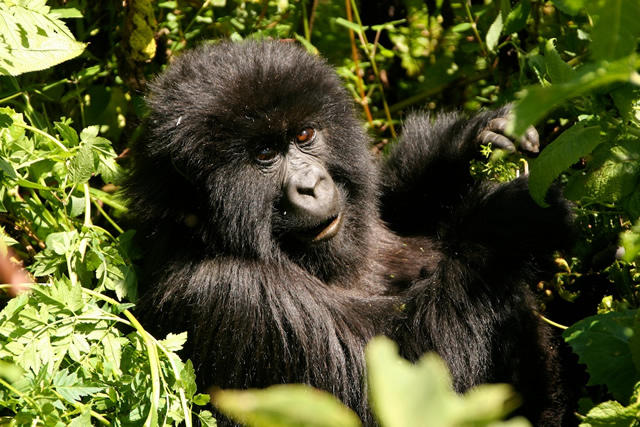
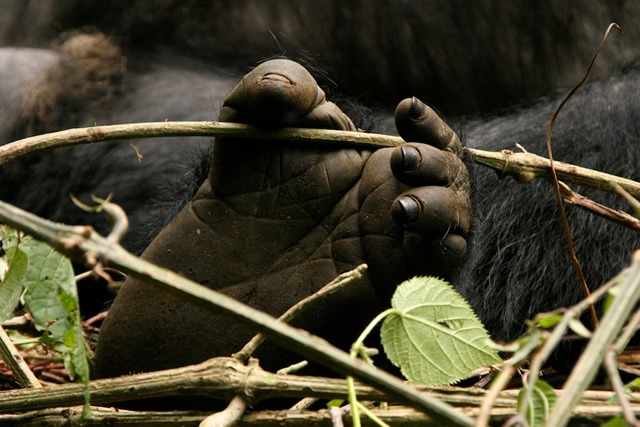
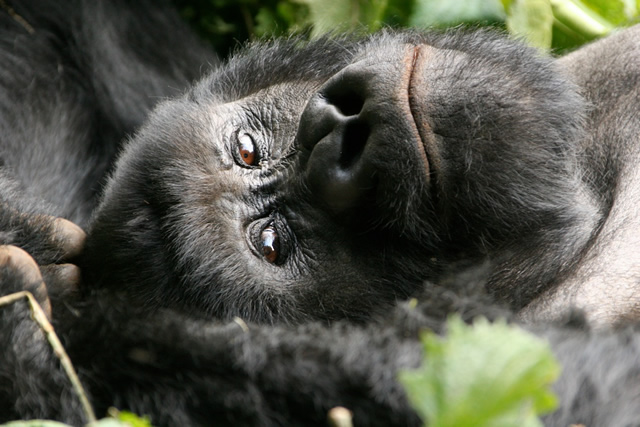
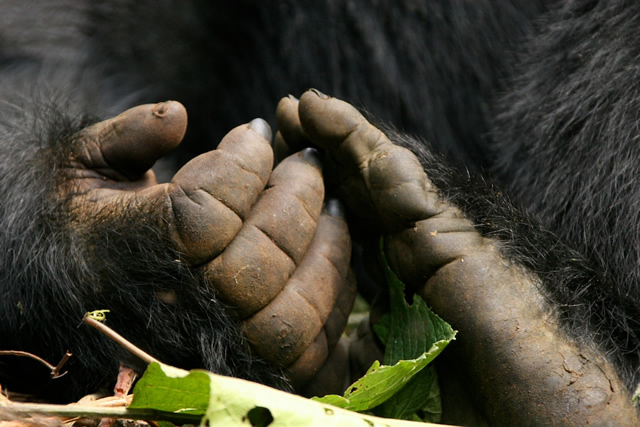
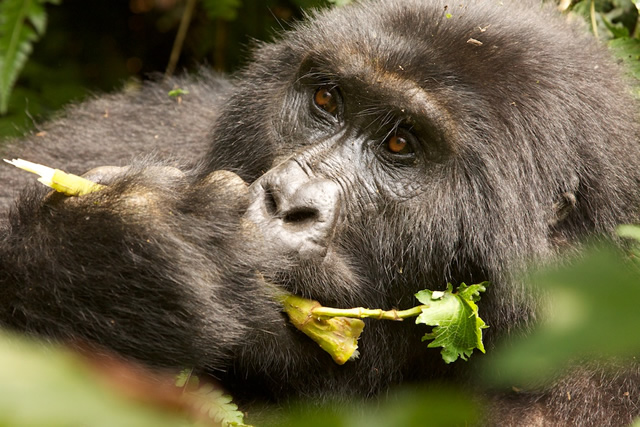
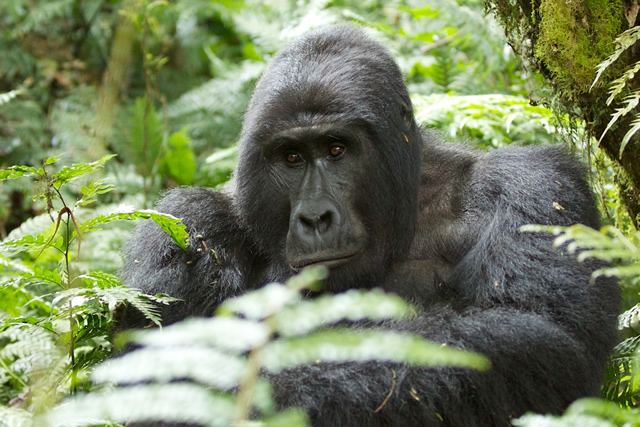
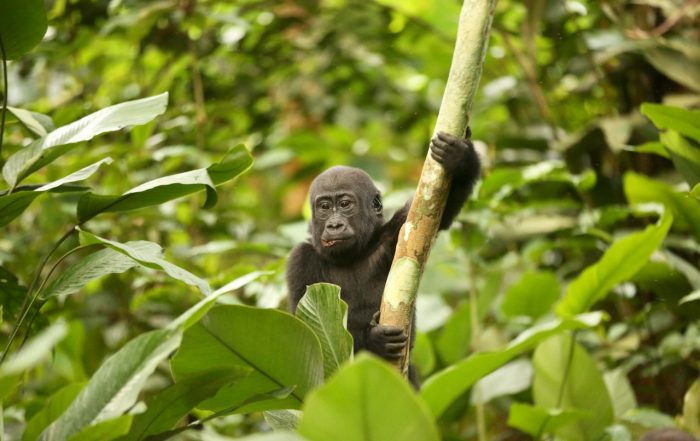
The trackers stop. I squint into the forest but see nothing, so I watch their eyes instead. Following their gaze, I notice – framed in a shaded window of leaves – that I am being watched. Its eyes are dark. It has a flat, smooth-skinned face. Its pitch-black fingers and shiny nails are wrapped around a vine.
That first encounter with a wild gorilla is not one I will ever forget, and every track since has been special in its own way.
My first was in the Virunga Mountains of Rwanda in 1990, when accommodation was basic and the country was on the brink of political turmoil. Rwanda today is unrecognisable. Volcanoes National Park is well-run and well-funded, and the choice of accommodation has transformed – most strikingly at the luxury end, where three outstanding lodges make it possible to track gorillas in the morning and relax in a spa before afternoon tea.
We also design and guide gorilla tracking safaris in Uganda’s Bwindi Impenetrable Forest, Rwanda’s northern neighbour. Tracks there are equally rewarding. The boutique lodges may not reach the sybaritic heights of Rwanda’s flagship properties, but they offer comfortable rooms, excellent food and attentive service that more than satisfy most travellers.
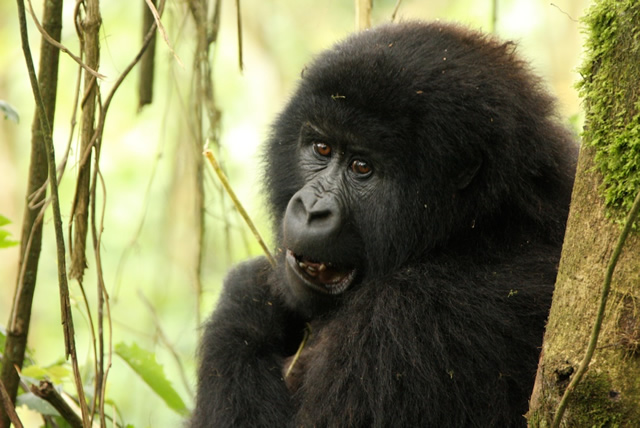
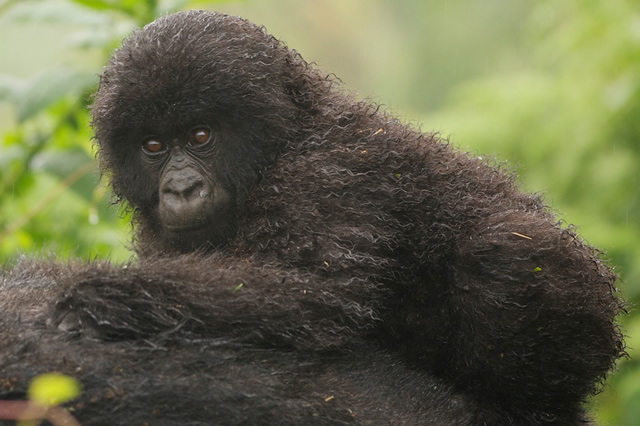
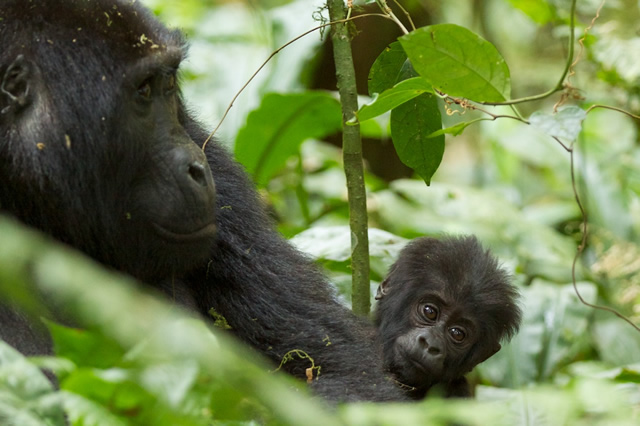
Both regions are densely populated, making it easy to visit local villages and engage with the culture. Treks often begin near a village, passing through potato fields before reaching a low stone wall that marks the national park boundary – the threshold where farmland gives way to forest. Both parks are home to the Mountain gorilla (Gorilla beringei beringei), the species studied by American primatologist Dian Fossey.
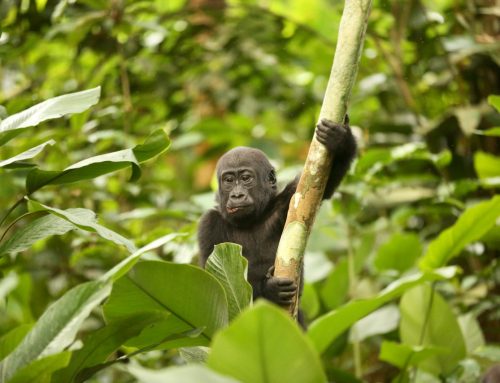
Recently A Step Ahead guide Dave Christensen (the person responsible for all these photos) guided a safari to a third area to track wild gorillas, but this time Western lowland gorillas (Gorilla gorilla gorilla), on the opposite side of Africa. You can read about this here.
Justin